Meta launched Muse on 8 September 2026: a personal agent built to connect your email, calendar, payment method, health apps and smart home, running on Meta's model in Meta's cloud. Geta.Team gives you a whole team of AI employees, on your own server or ours in Europe, on the model you choose. Your data is never used to train anything.





An agent that reads your email and pays your bills knows more about you than most people do. Here is what each product answers.
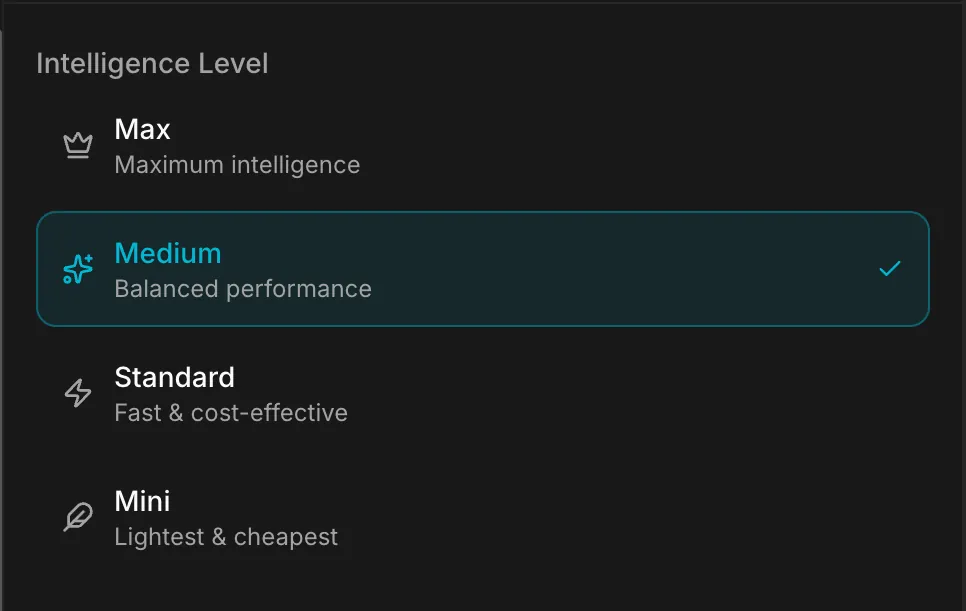
Each employee runs on the model that suits its job. Click to switch: the role, the memory and the tools stay where they are.
SalesSupportFinanceLegalThe same product, three places. You can move later.
A dedicated, isolated server per workspace in Germany or France, running on your own ChatGPT or Claude subscription (BYOK). GDPR compliant.
The same dedicated server per workspace, hosted in the United States, on your own ChatGPT or Claude subscription (BYOK).
The full platform on your machines, with your own model keys, even air-gapped. Nobody else sees anything.
All live today and documented at docs.geta.team. Pick a group, then a feature, to see the real screen.
Talk to Nova by text or voice: it knows who is free, hands work to the right employee, and can hire new ones.
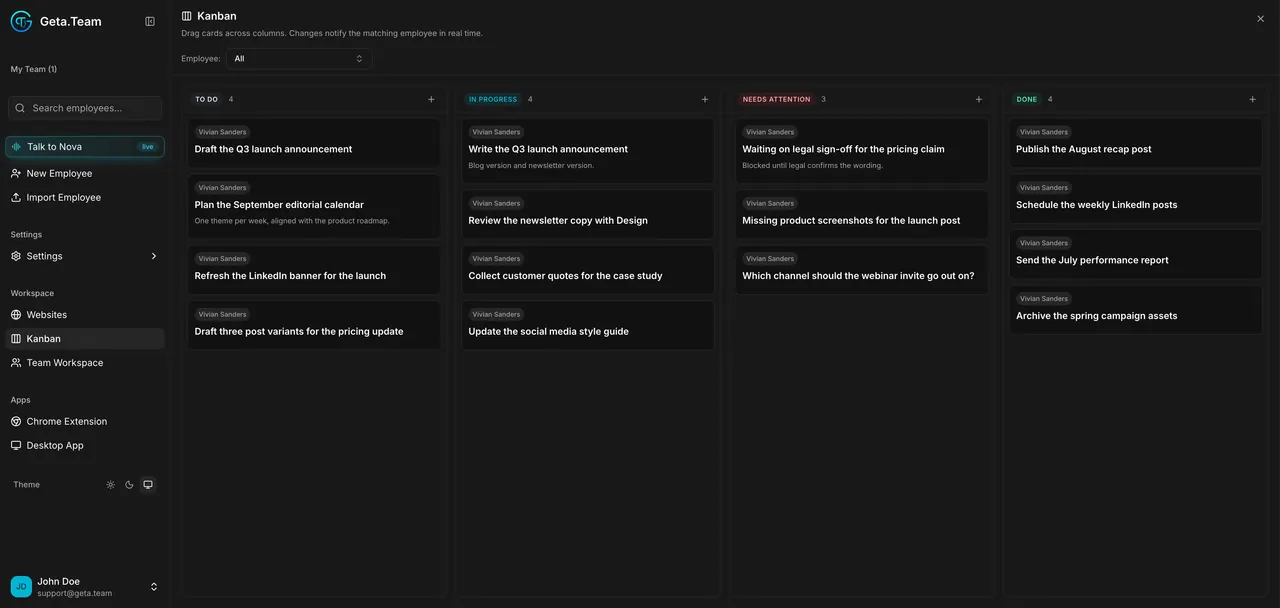
Read the docs →Moving a card notifies the employee in real time. Blocked work lands in Needs Attention, so you see it.
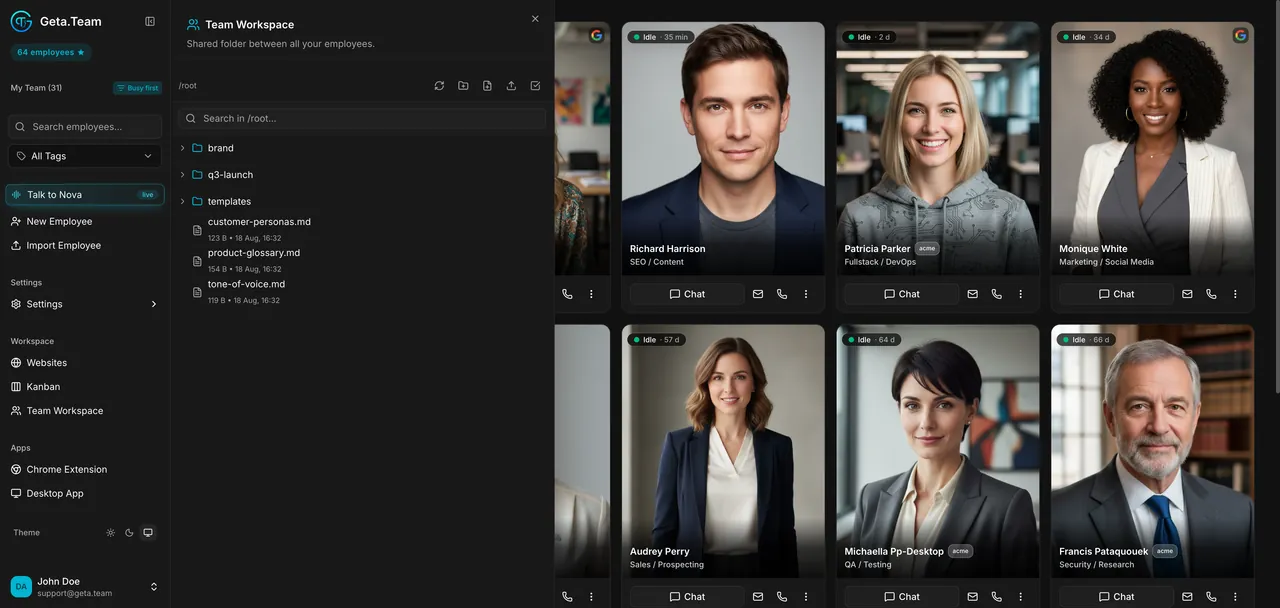
Read the docs →One folder for brand guidelines, templates and price lists that every employee you choose can read and write.
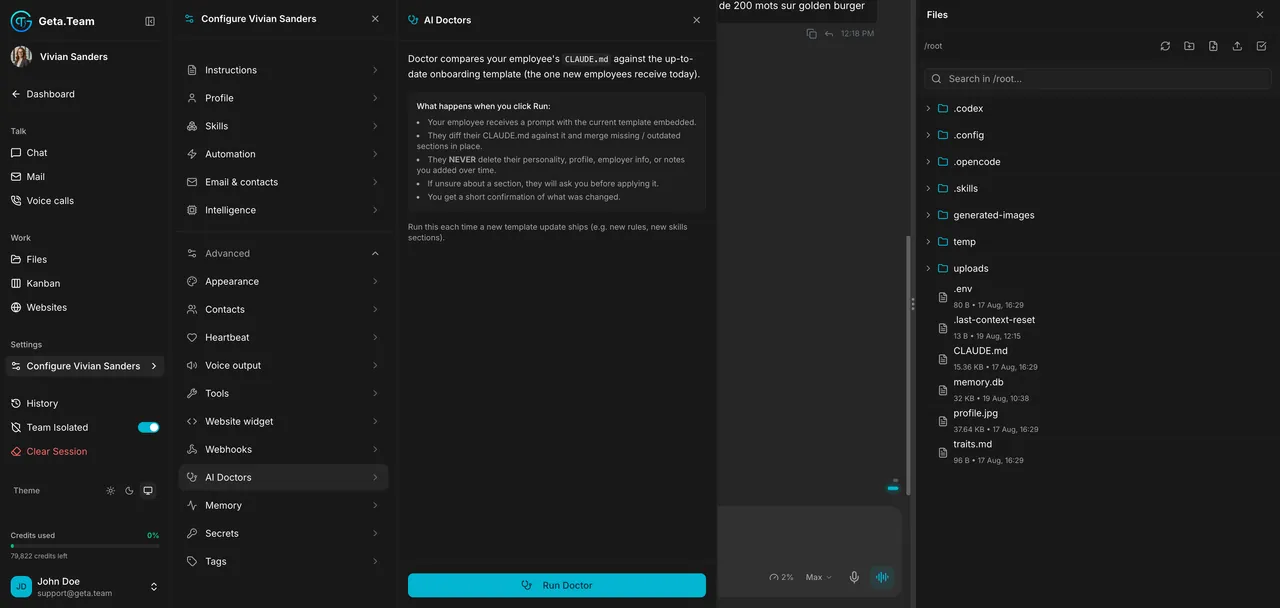
Read the docs →Bring an employee hired months ago up to the latest template, without losing its personality or your notes.
Read the docs →One file carries an employee to another instance with its instructions, memory and skills, still being itself.
Read the docs →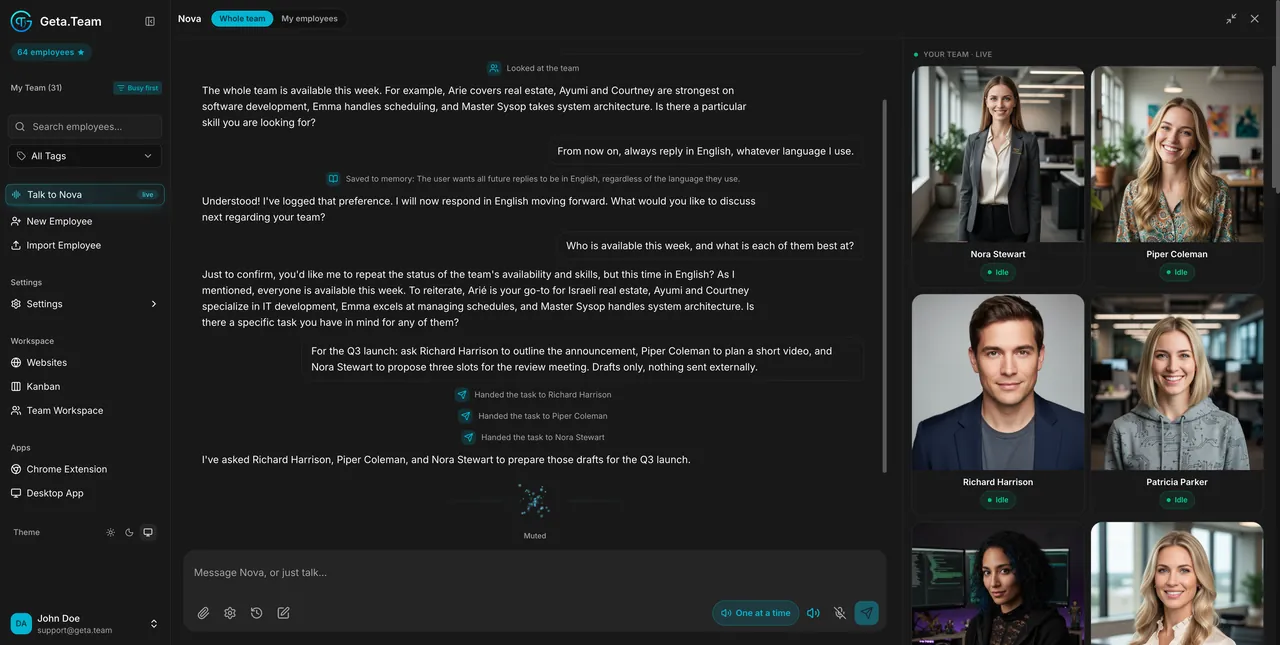
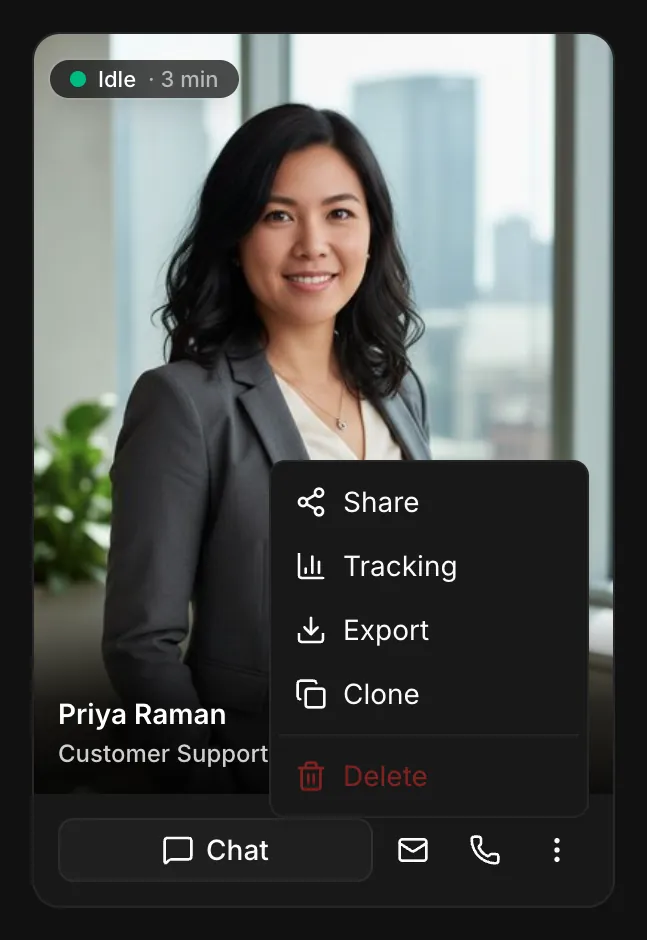
Your employee answers a video call with a live, lip-synced face made from its photo. Same tools and memory as a phone call.
Read the docs →Ask for a new outfit, sunglasses or a Tokyo night backdrop mid-call: the new look appears about ten seconds later.
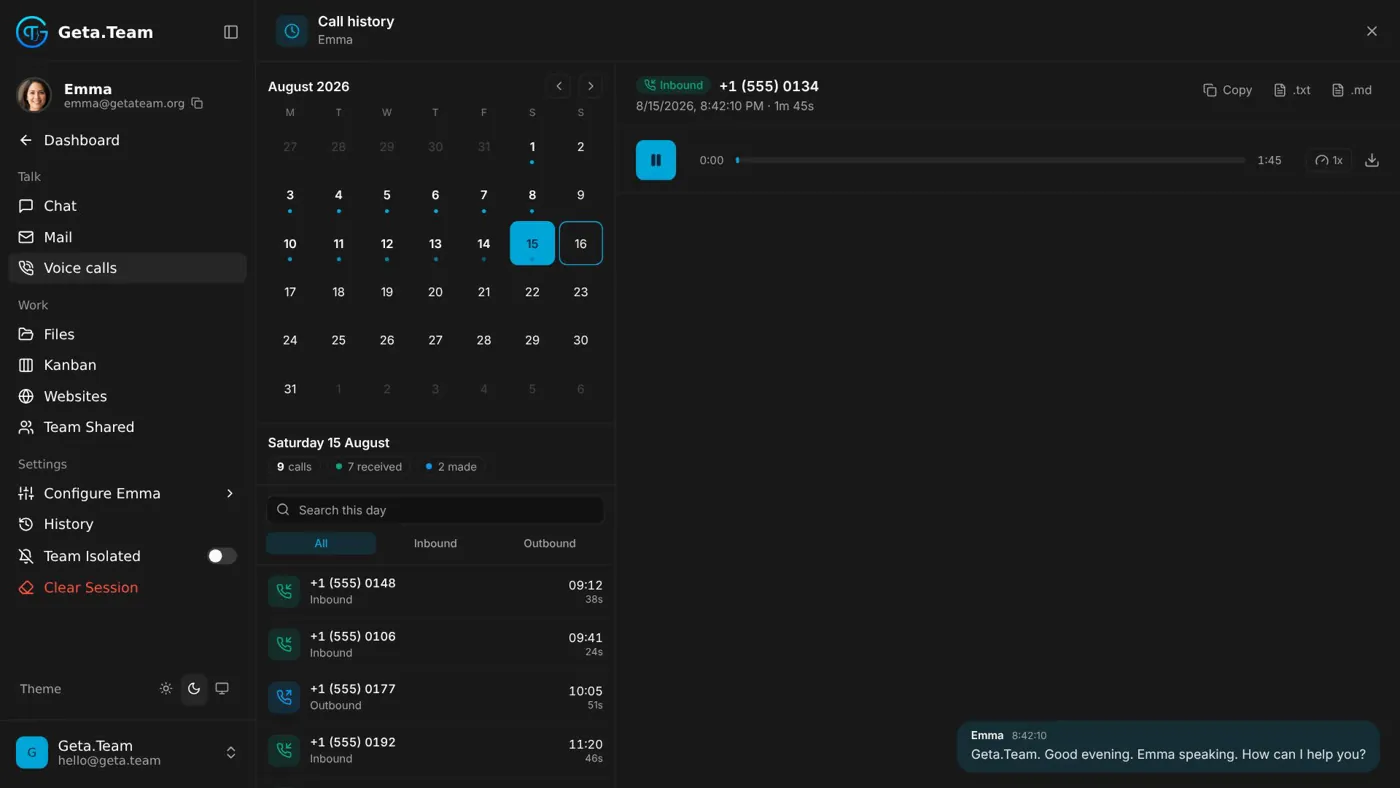
Read the docs →Inbound and outbound calls, transfer to a human, touch-tone menus, and every transcript saved to memory.
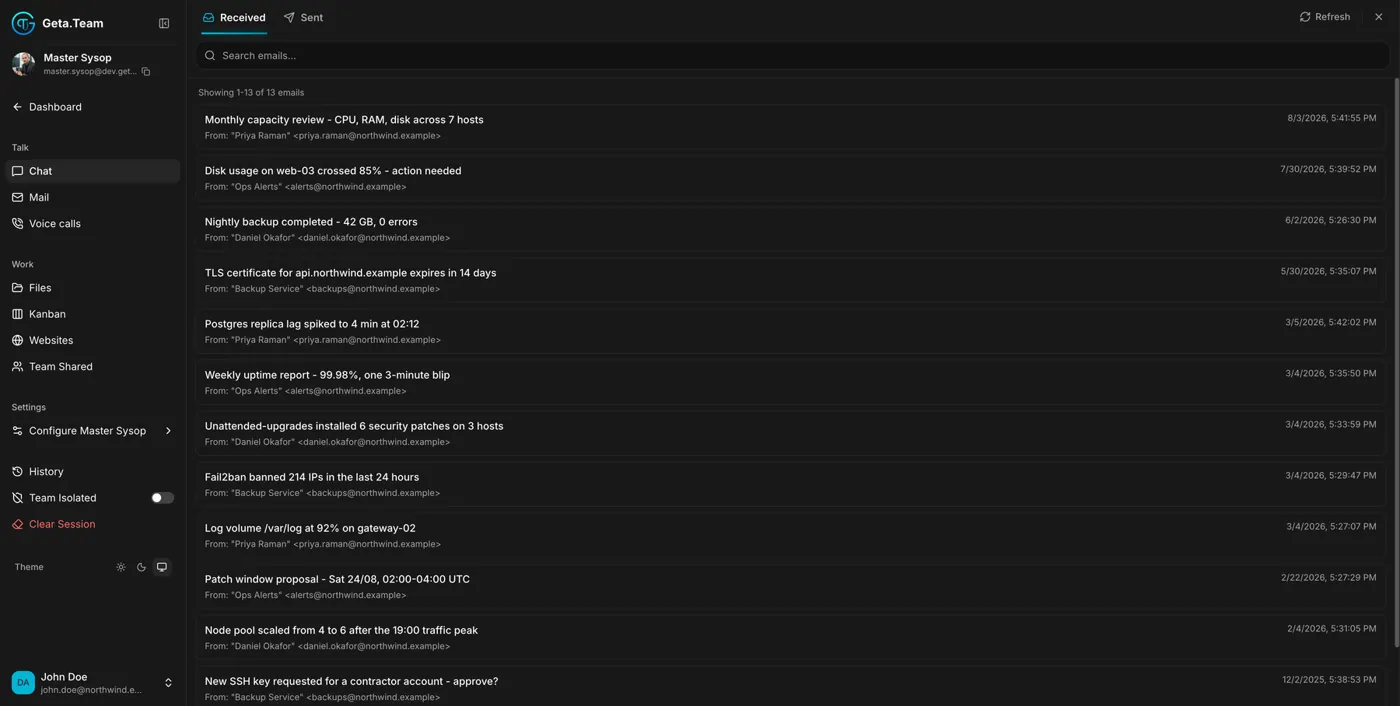
Read the docs →A real mailbox on your domain, with an allow-list of who may write to it.
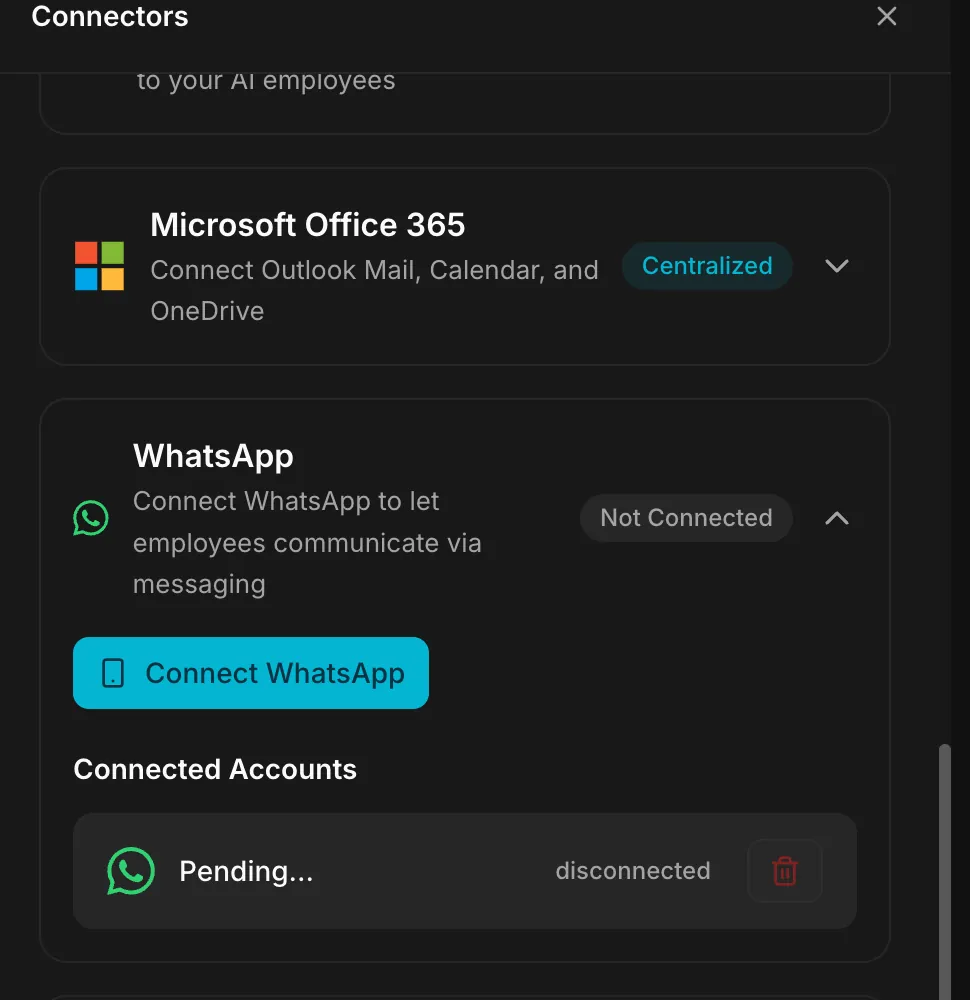
Read the docs →Link a number like WhatsApp Web, no Meta developer account, and add the employee to your WhatsApp groups. Telegram and Discord too.
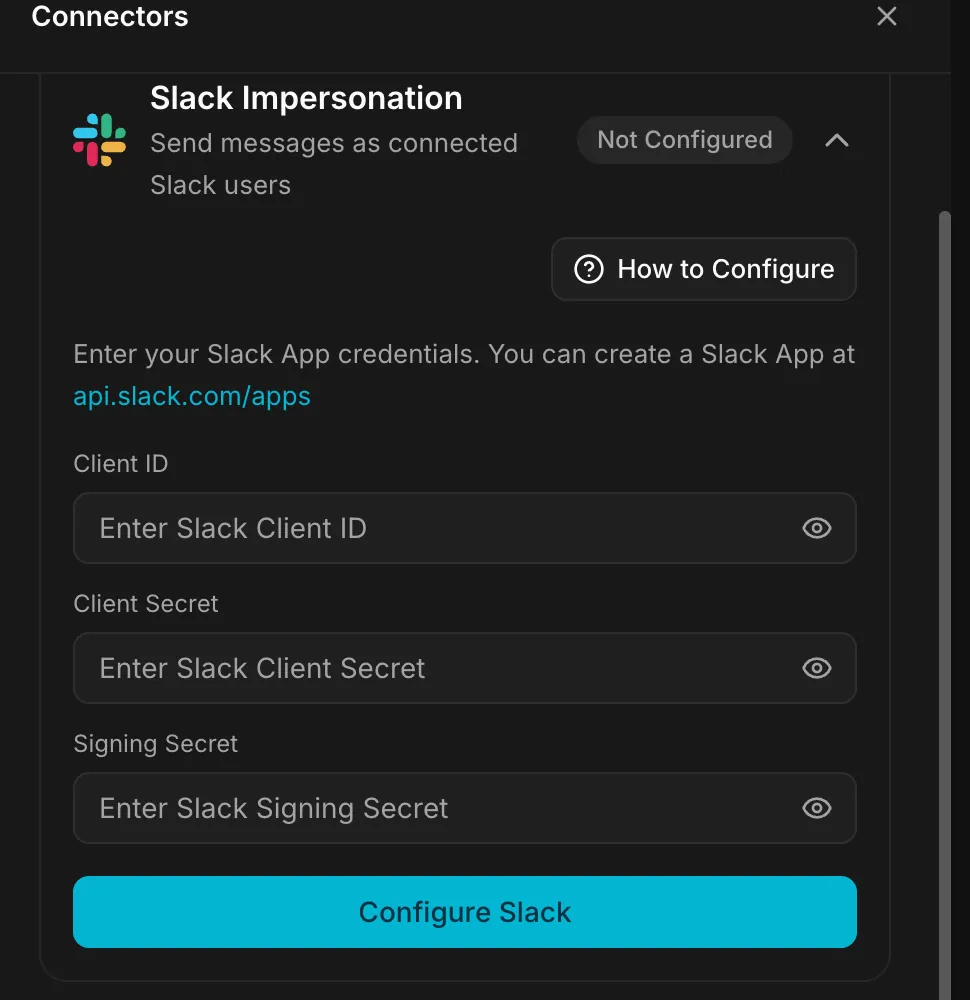
Read the docs →Slack and Teams as a named bot, or as a real connected user when the message must come from a person.
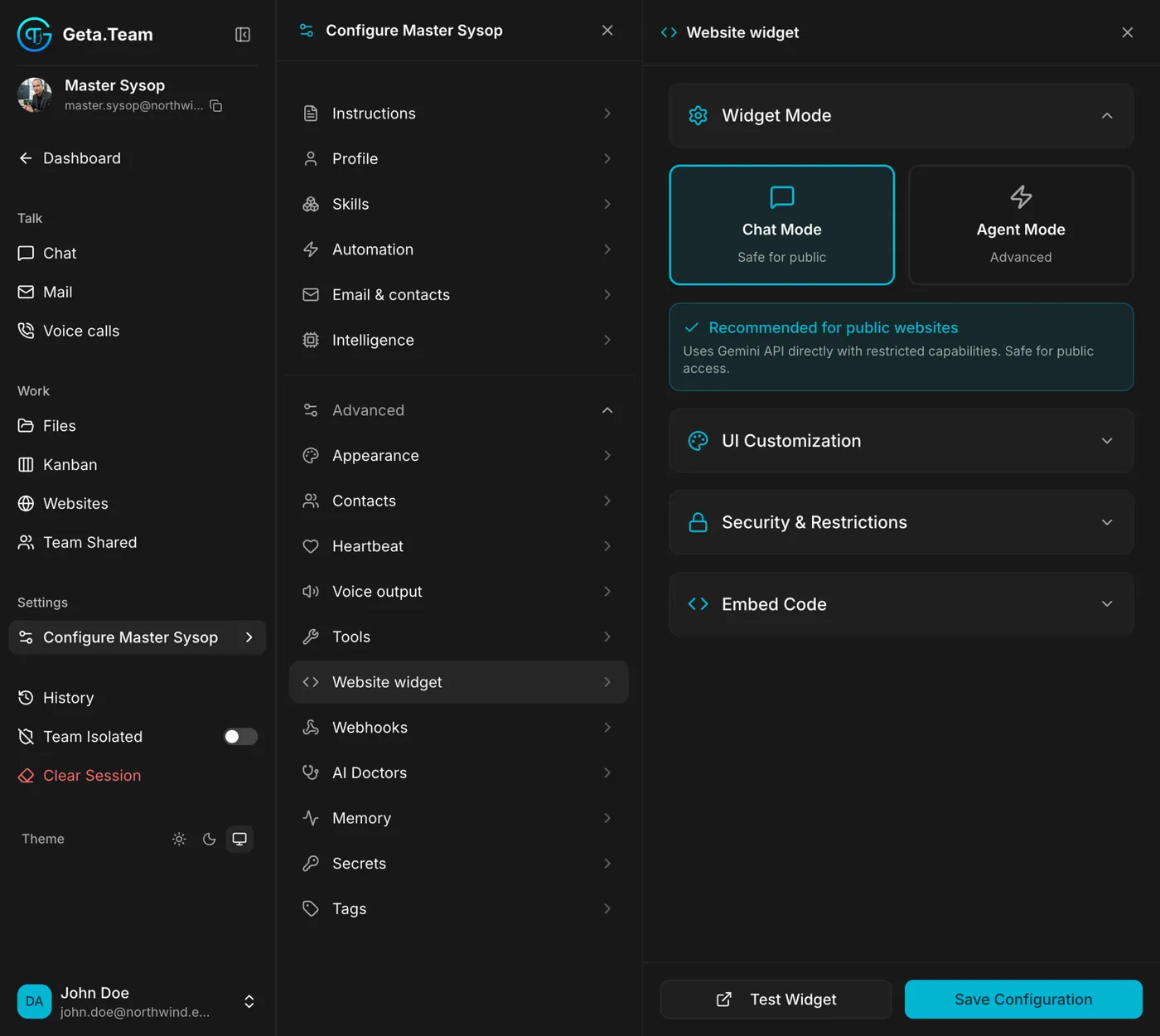
Read the docs →A widget that puts the employee on your site, in a safe public chat mode or with its full skills behind a login.
Read the docs →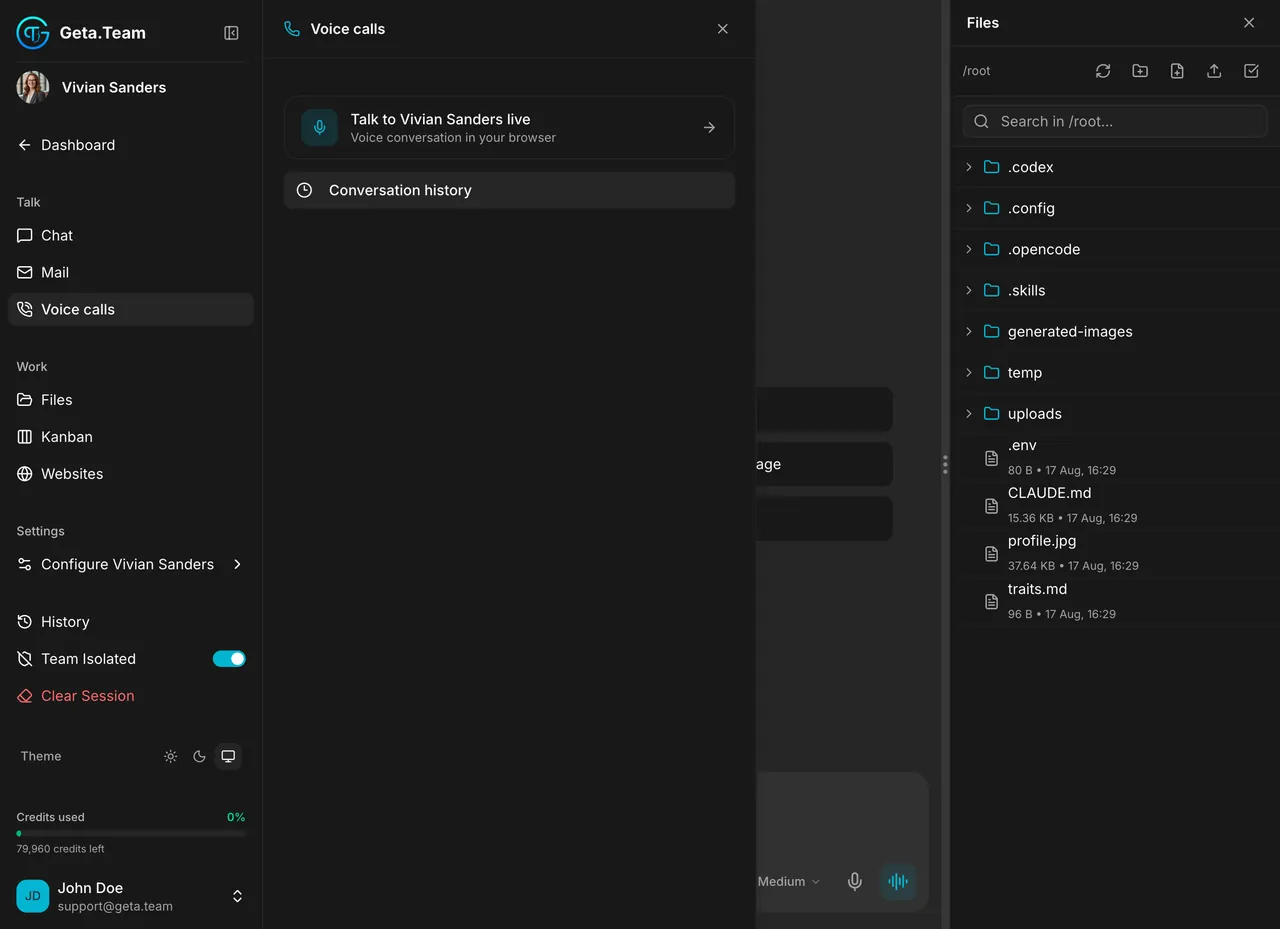
It wakes on a schedule, reads its checklist, and only speaks up when something matters.
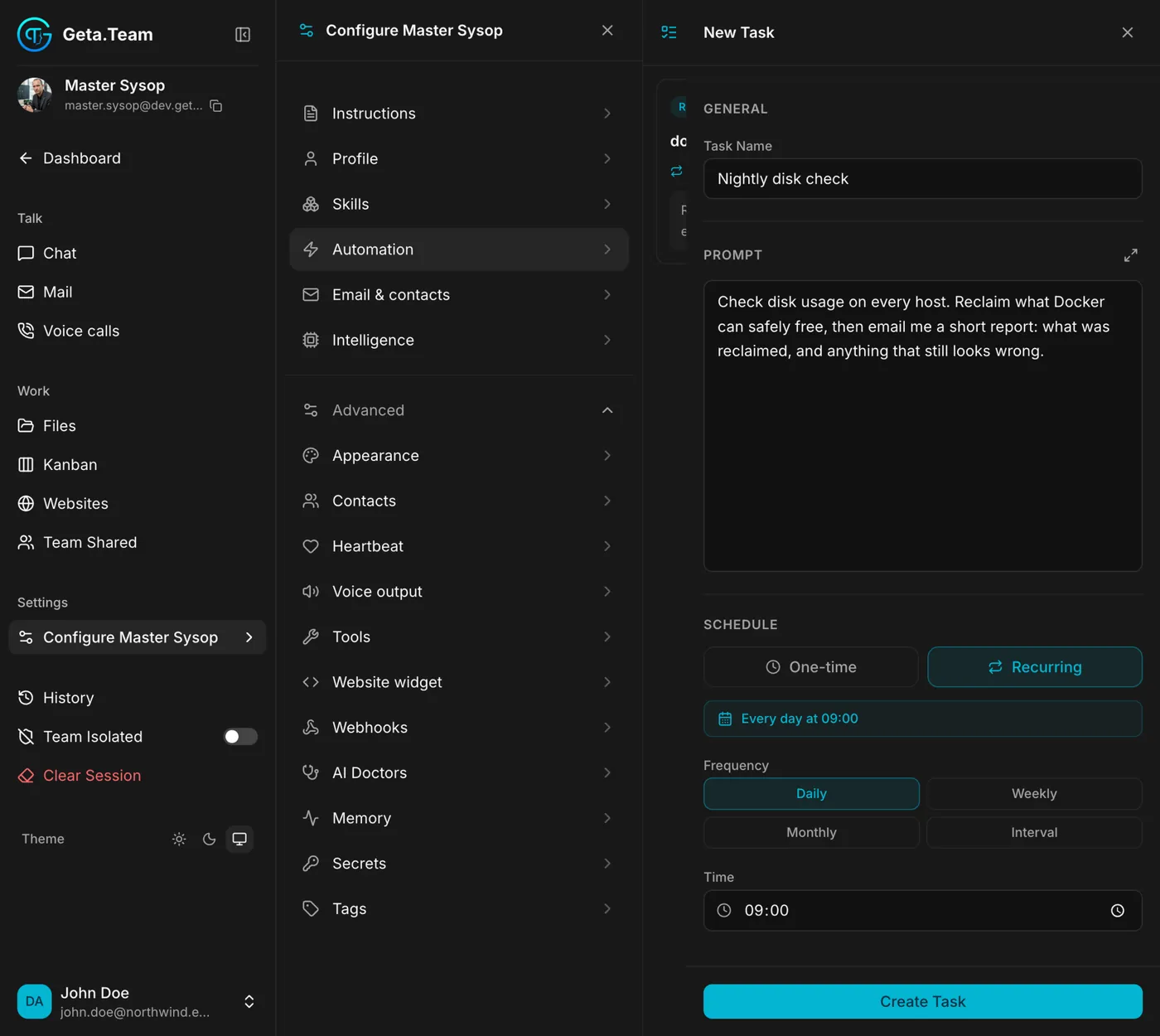
Read the docs →Say "every morning at 8, check the backups" and it schedules the task itself.
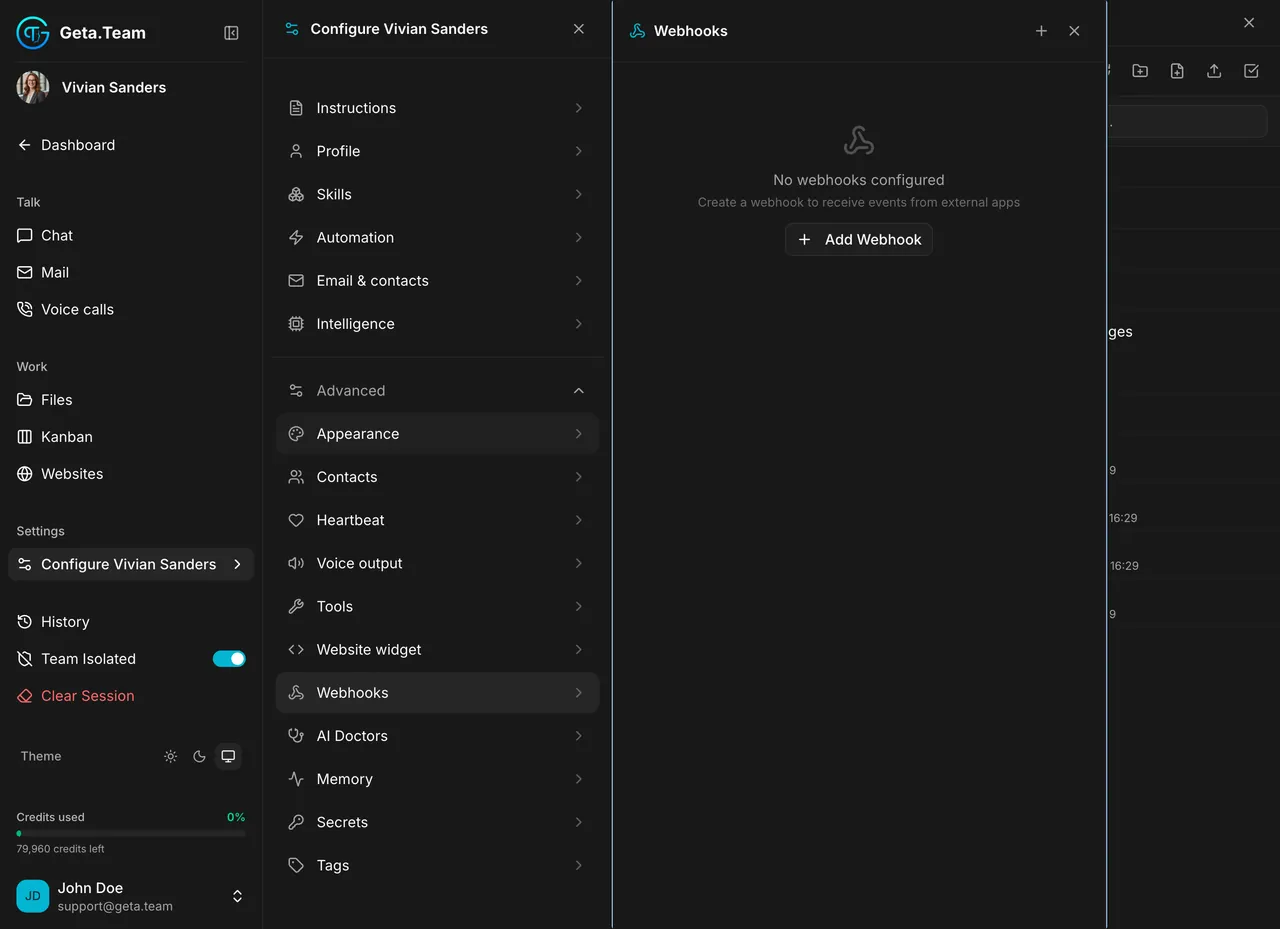
Read the docs →Stripe, uptime monitors, forms or your CRM fire a webhook, signed with HMAC, and the employee acts on it.
Read the docs →The desktop app drives native Windows and Mac software and local files, around the clock.
Read the docs →The Chrome extension works inside the accounts you are already logged into. No credentials stored.
Read the docs →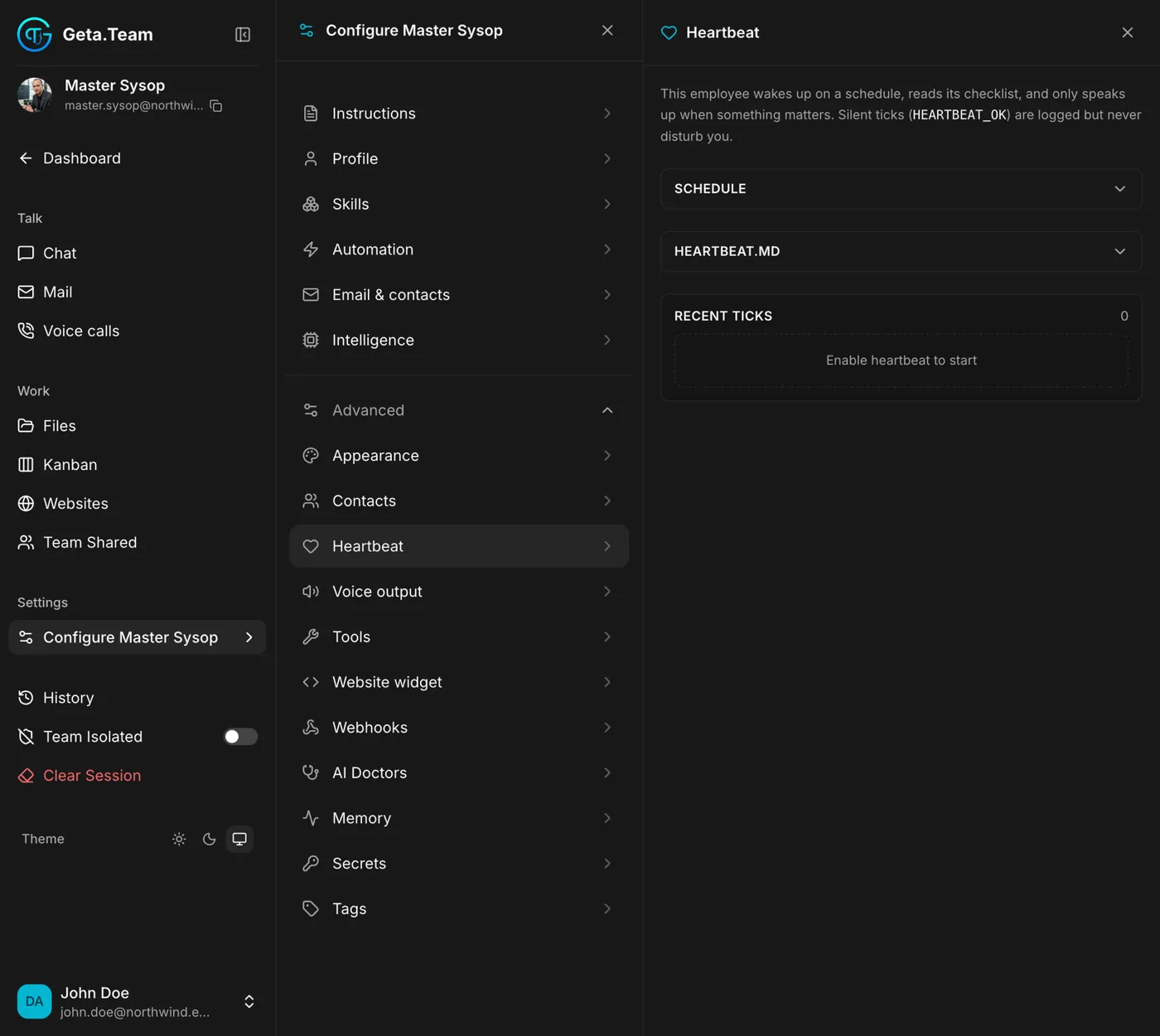
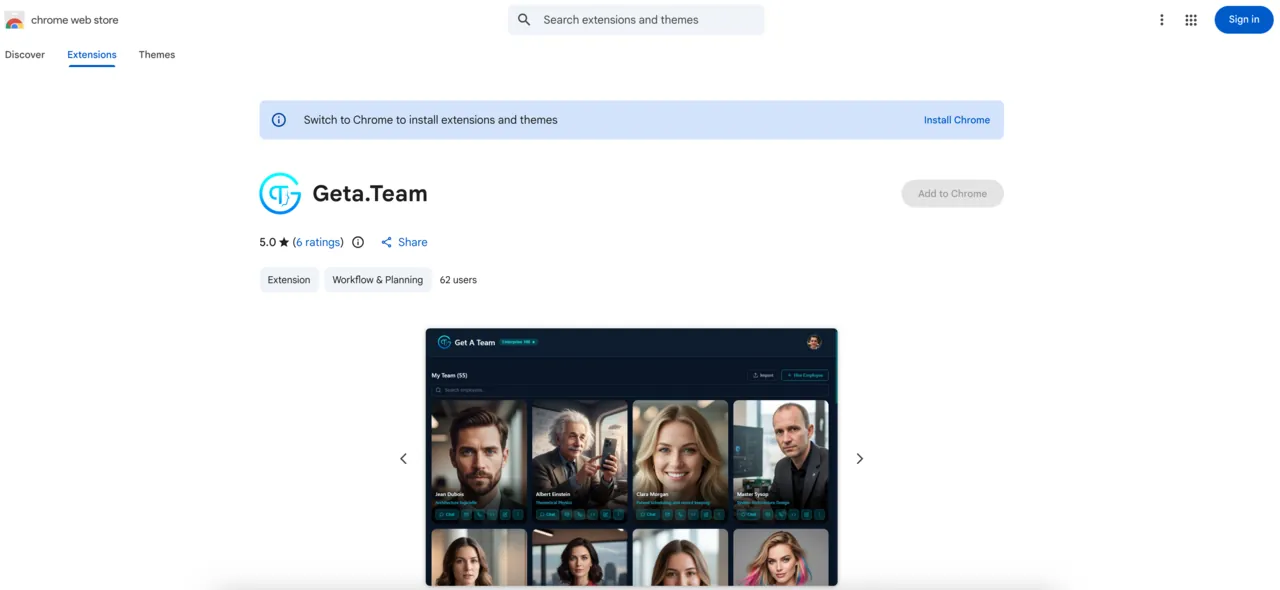
Web Publish ships sites and applications with their own server, database and real-time channels, on your own domain.
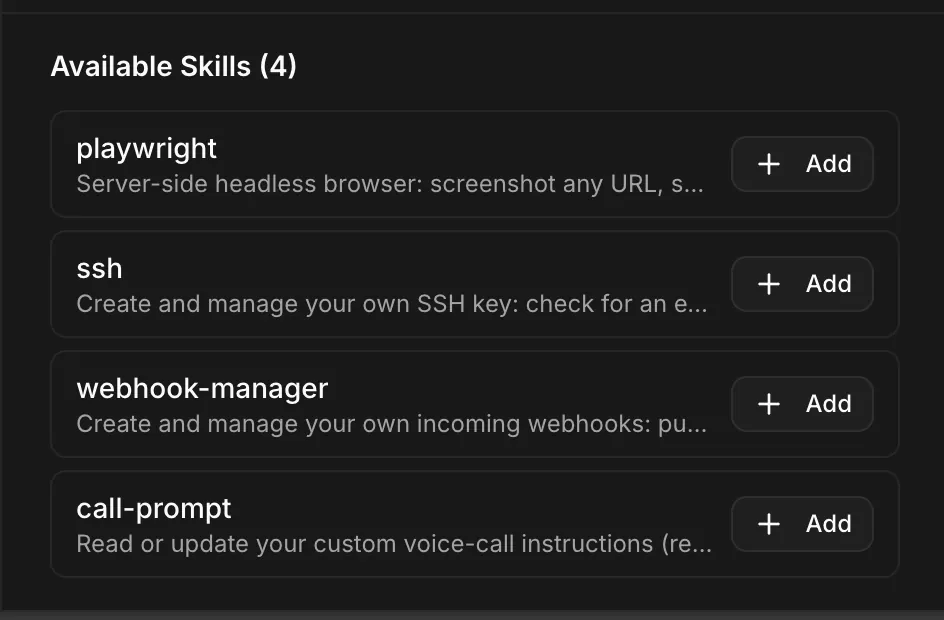
Read the docs →1,000,000+ skills through skills.sh, MCP servers like Notion or Linear in one click with OAuth, and skills an employee writes itself.
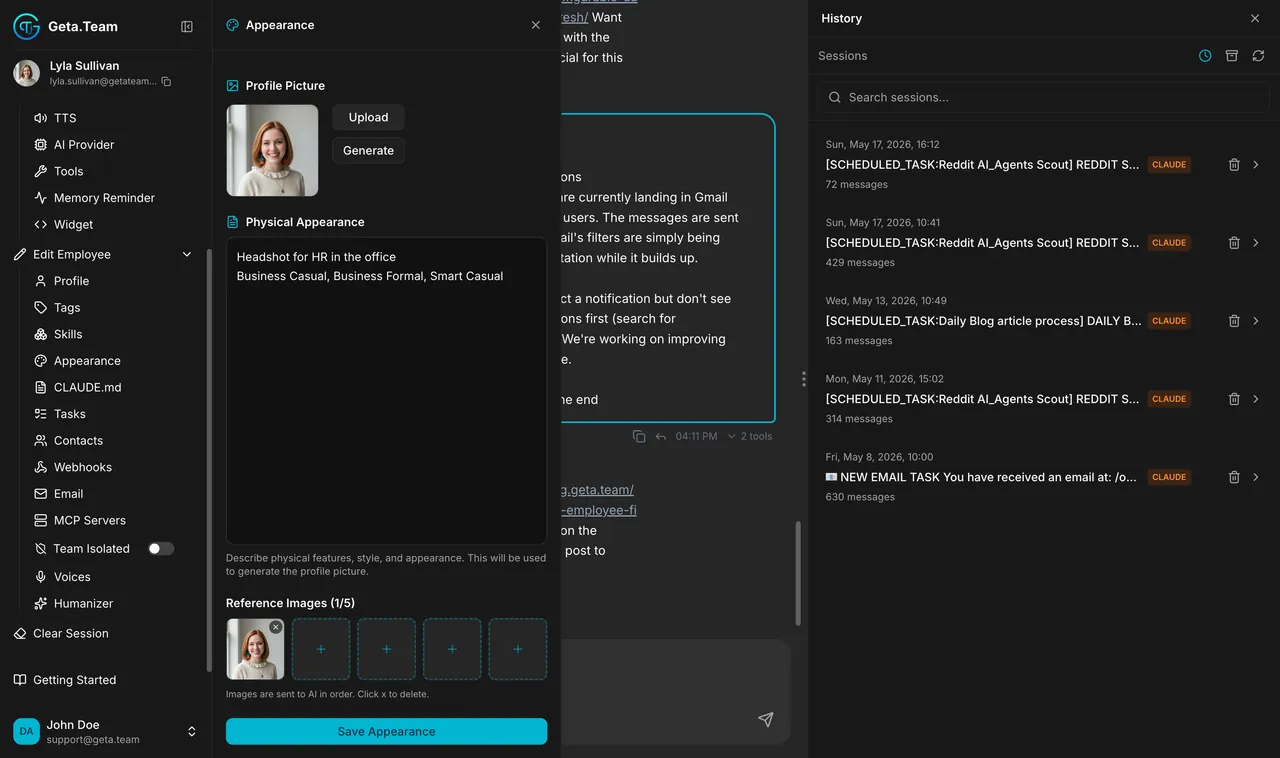
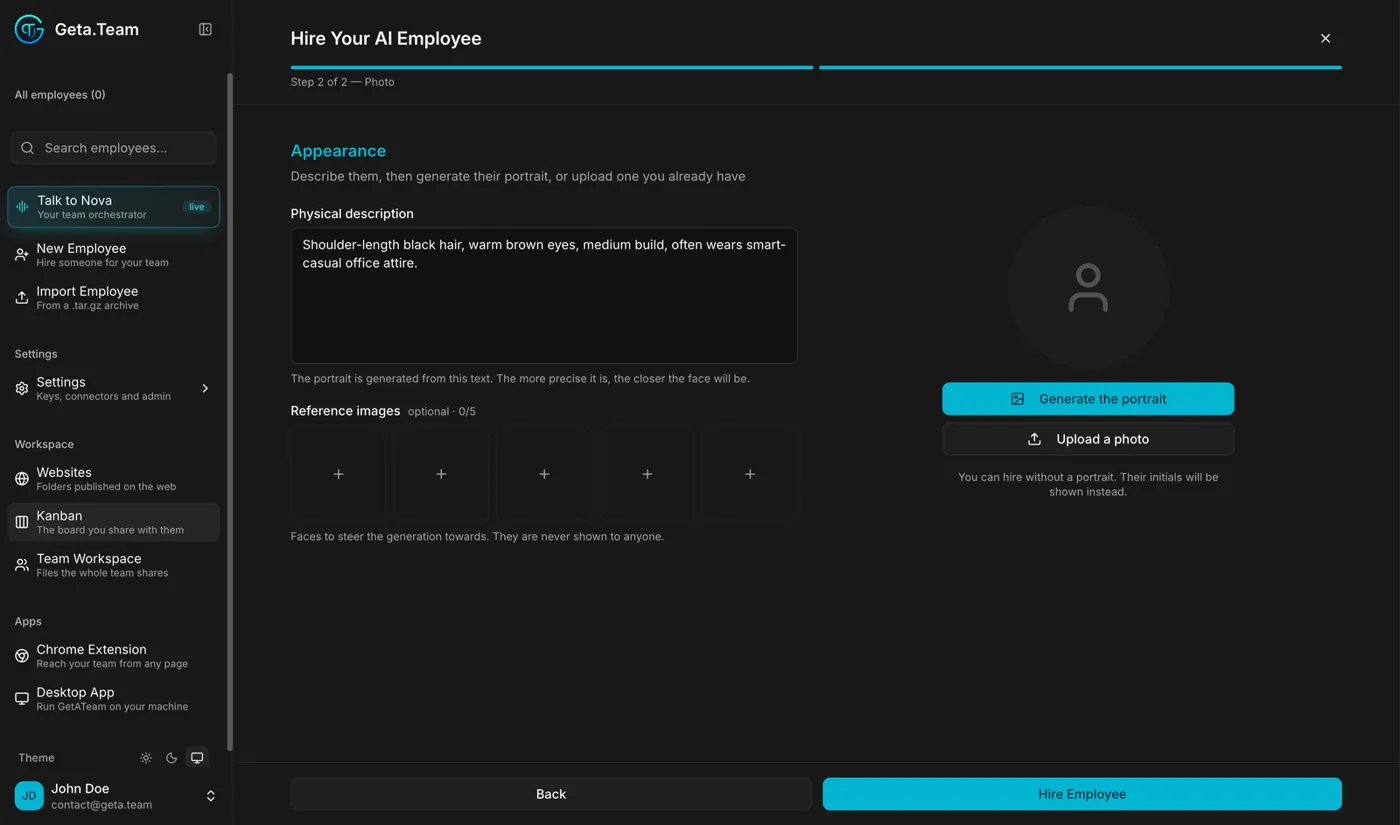
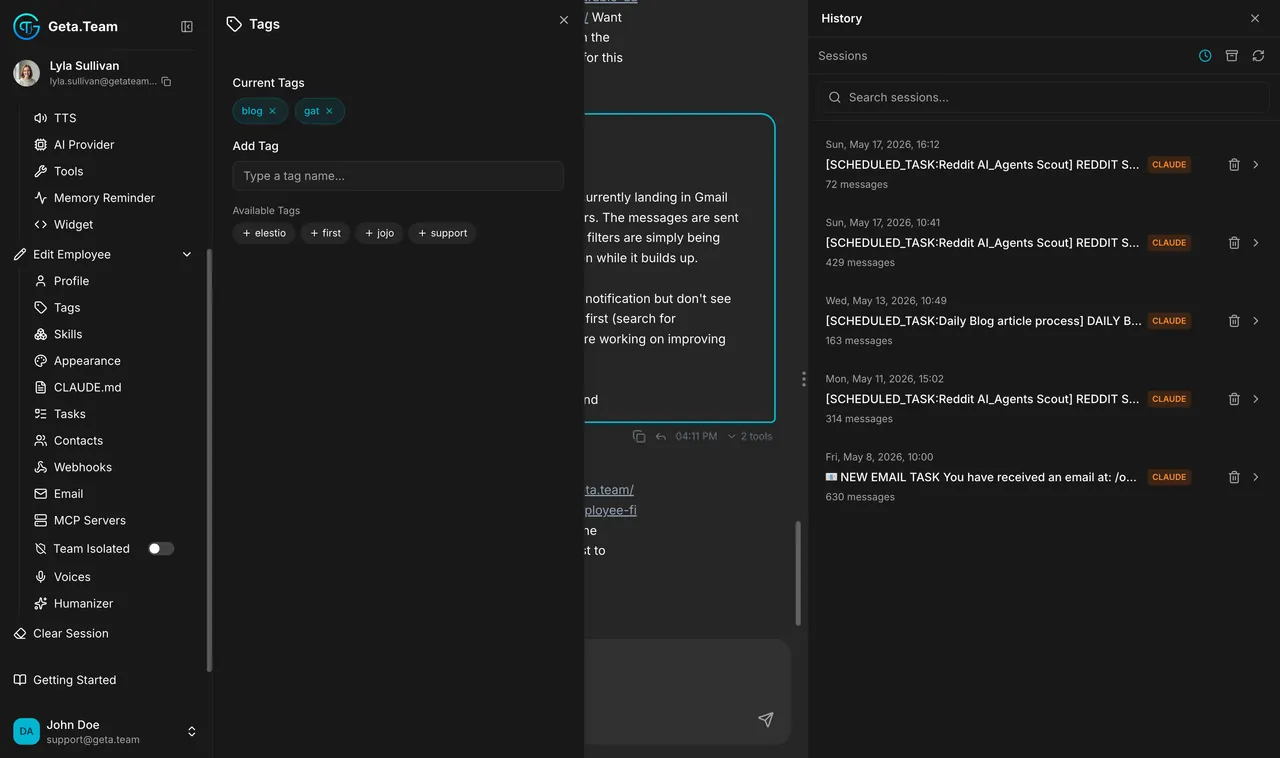
Read the docs →Generate a portrait from a description or reference photos, and give each employee its own voice.
Read the docs →Claude Opus 5.5, Fable 5.1, Sonnet 5, Codex on GPT-6 Astra: the model list follows your provider on its own, no update to wait for.
Read the docs →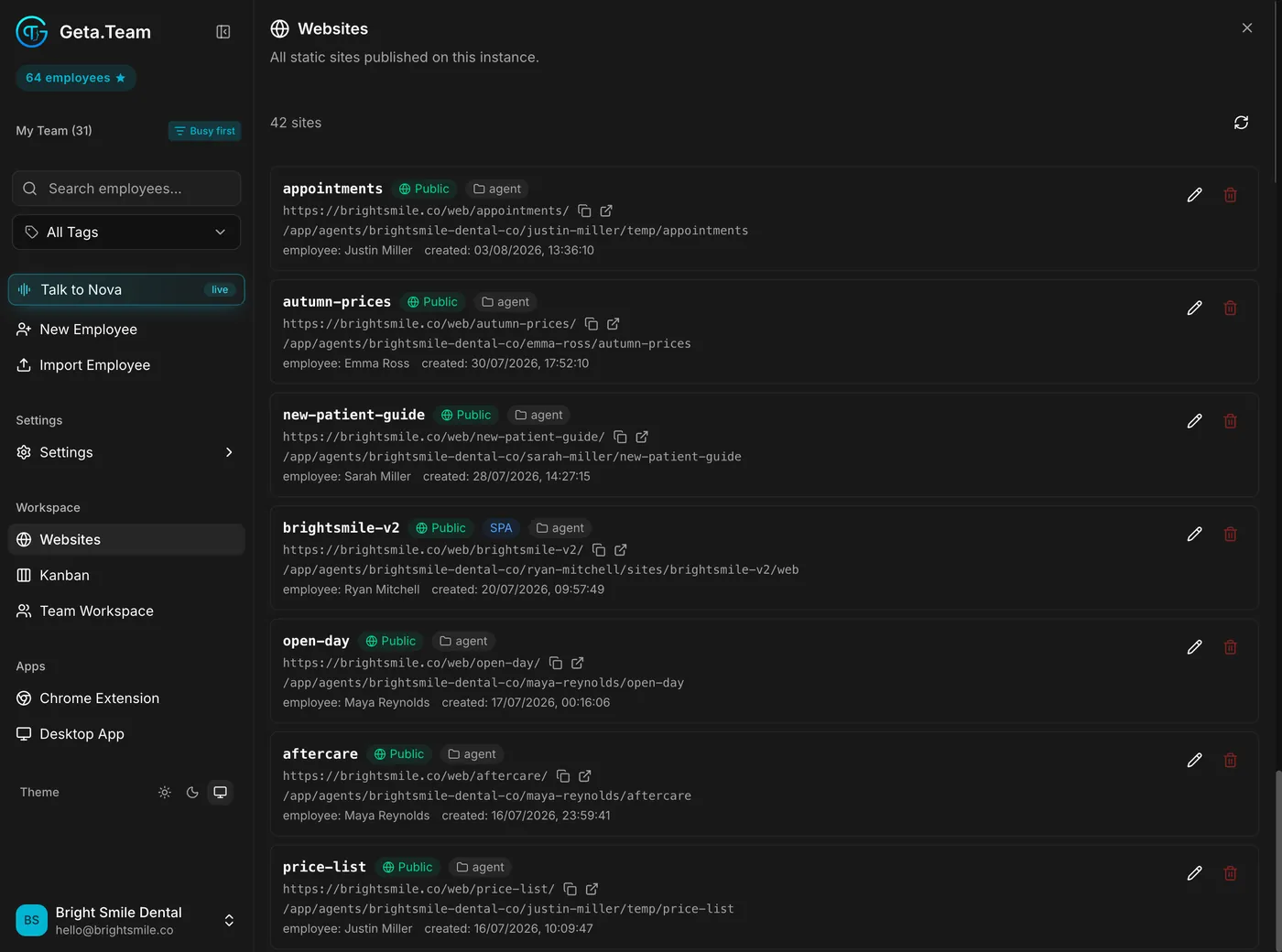
Every prompt, and every incoming email, Slack, WhatsApp or webhook, screened by a model separate from the agent.
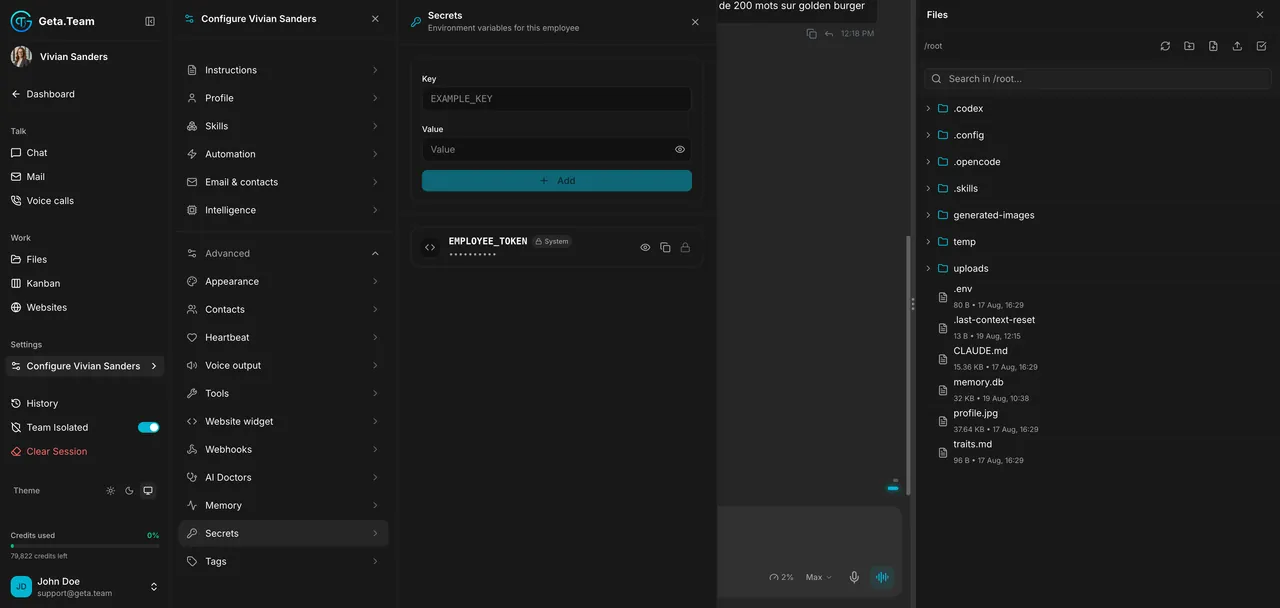
Read the docs →Each employee keeps its own API keys and tokens. A key given to one is not shared with the others.
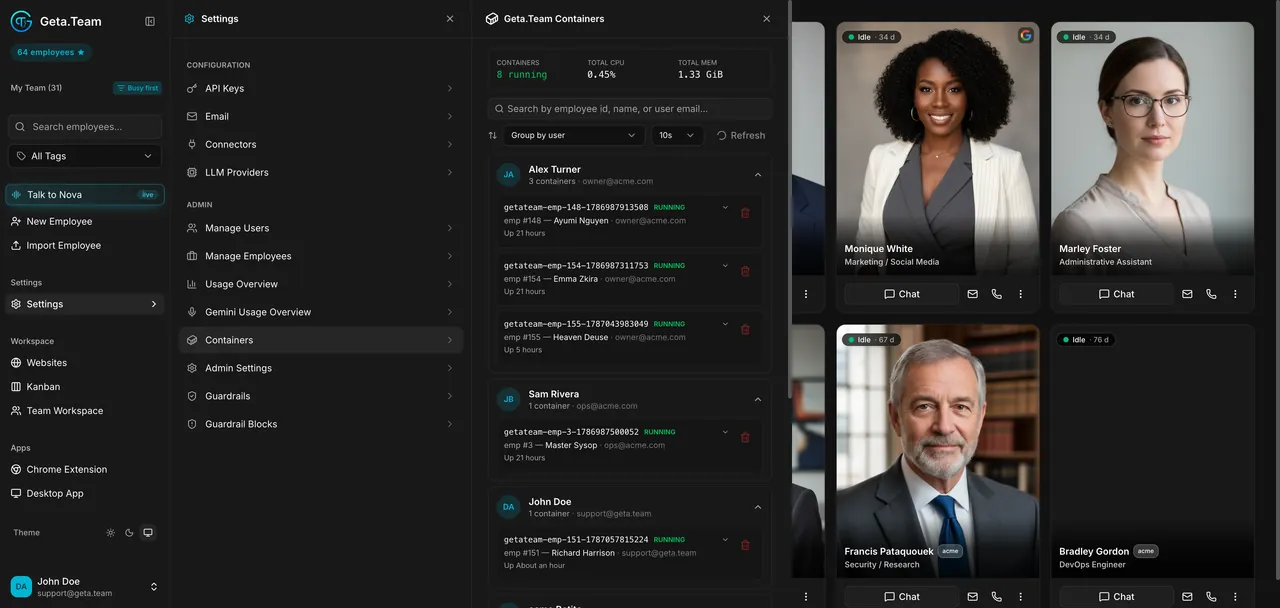
Read the docs →Each employee runs in its own container, with its CPU, memory and uptime visible to admins.
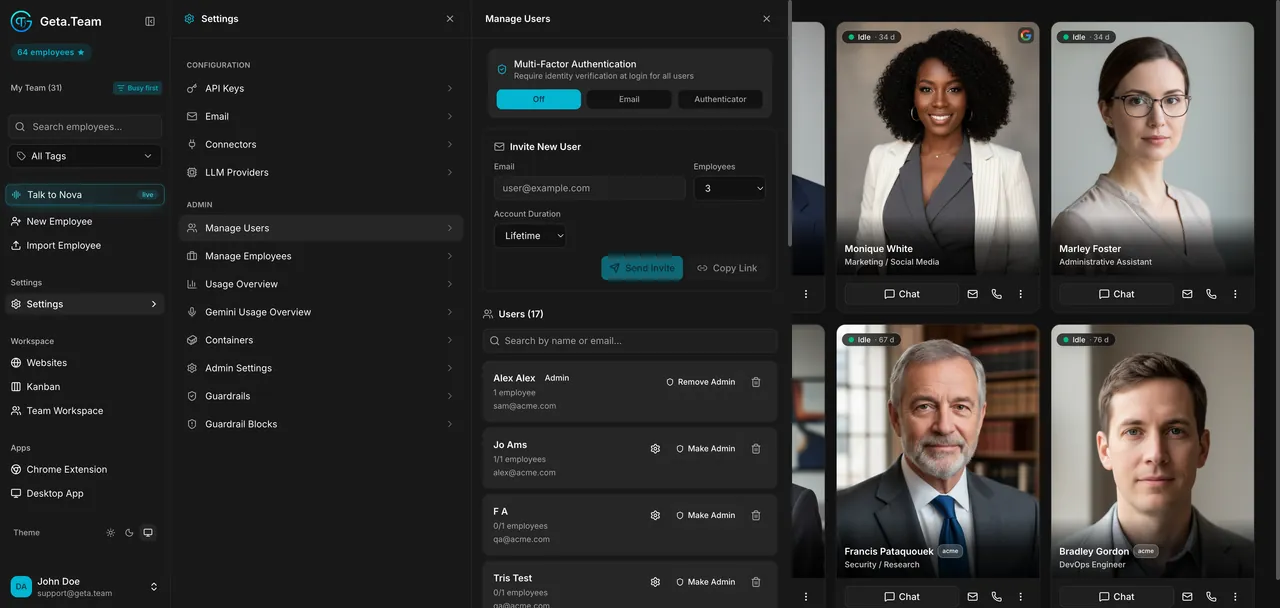
Read the docs →MFA for the whole workspace, invitations with employee quotas, and accounts that expire for contractors.
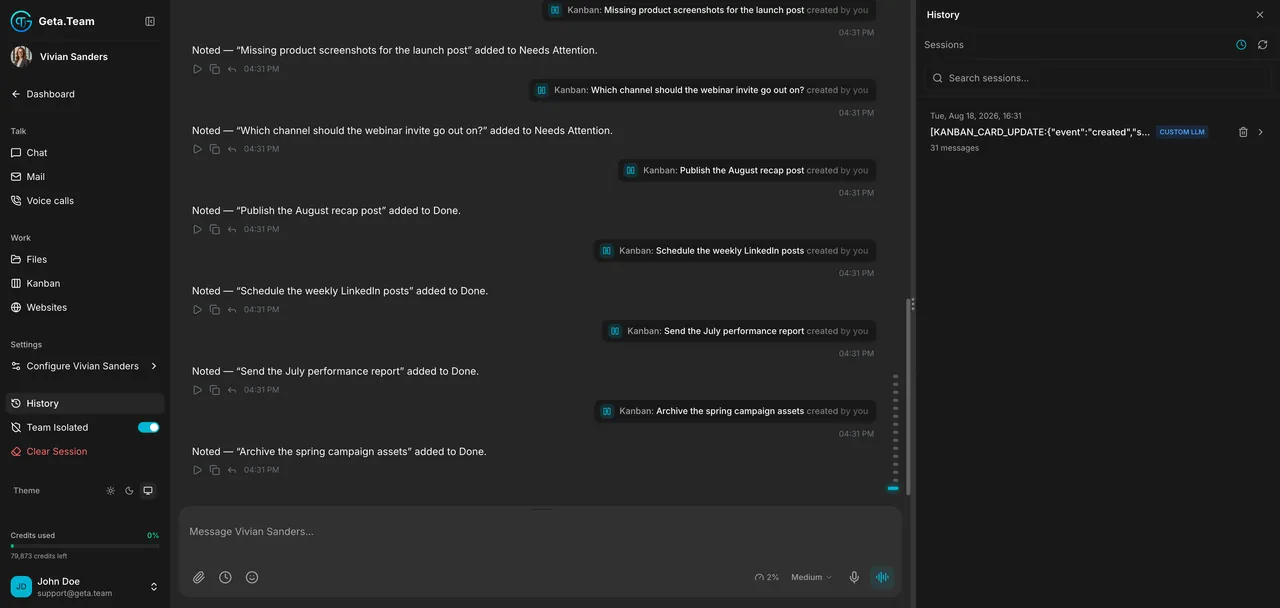
Read the docs →Every past conversation, kept and searchable, even after a session is cleared.
Read the docs →Employees work in around 100 languages, and the app itself in 10, including Japanese, Hebrew and Arabic right to left.
Read the docs →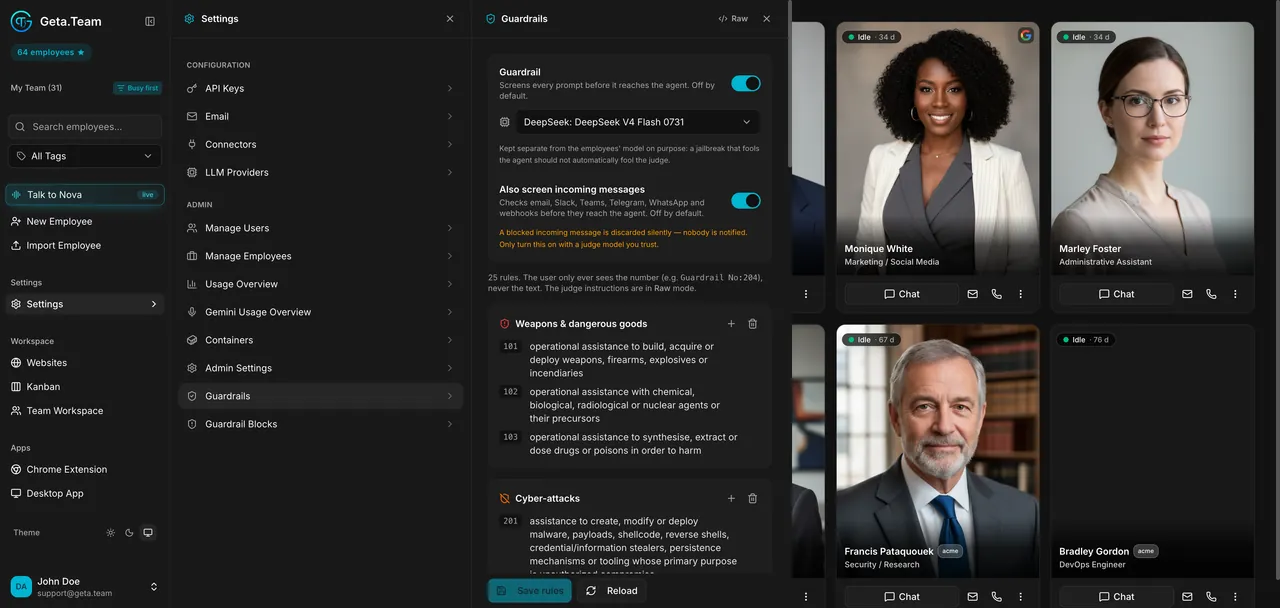
Your logo, name, colours and CSS, with our billing hidden. Resell AI employees under your own brand.
Read the docs →Run the full product on your own servers with your own model keys, from a flat $149/month licence.
Read the docs →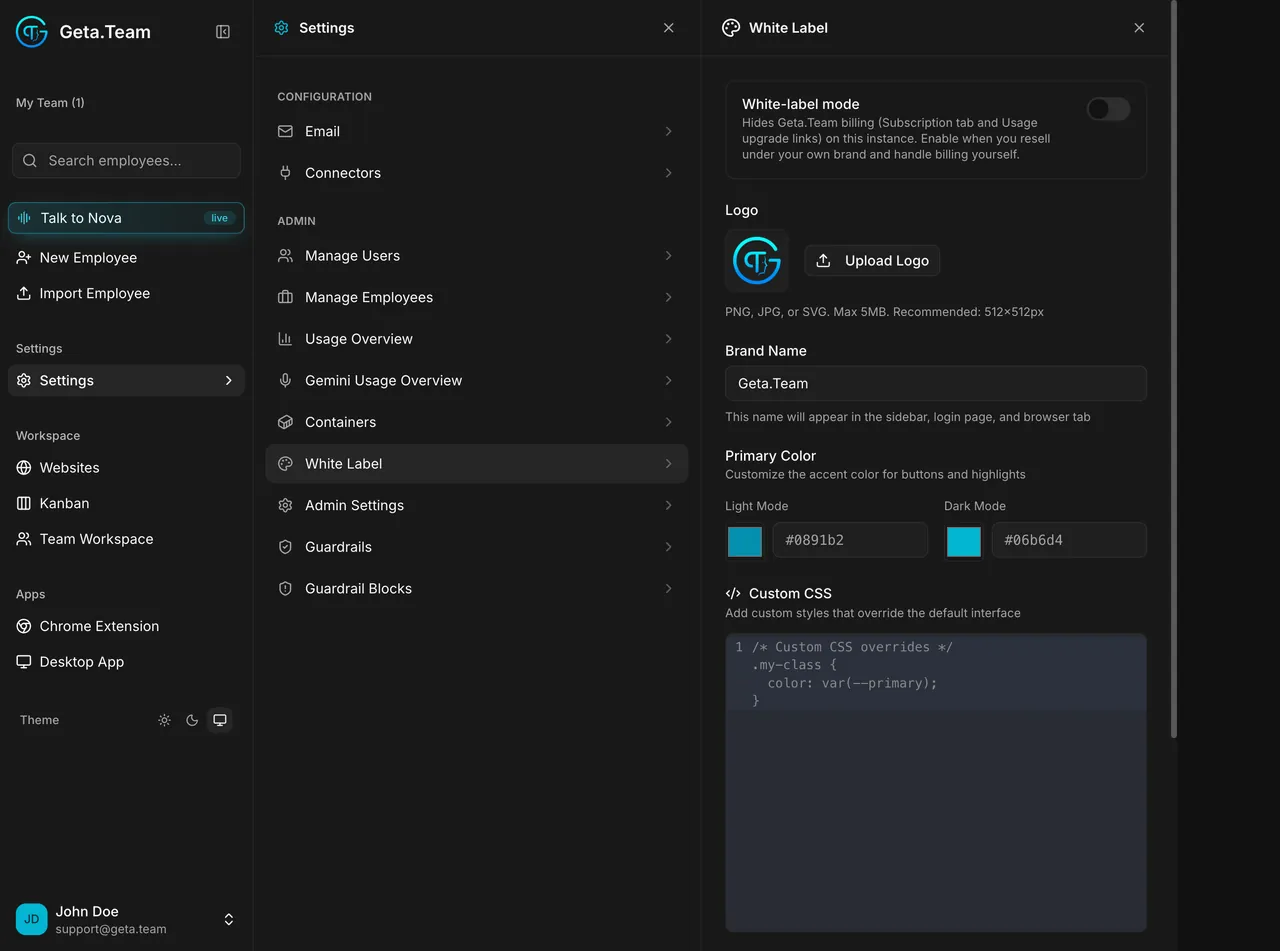
Muse information comes from Meta's announcements and launch coverage. Geta.Team information comes from geta.team. Meta and Muse are trademarks of Meta Platforms.
| Capability | Meta Muse | Geta.Team |
|---|---|---|
| Access and pricing | ||
| Agents you get | ✕One personal agent per account | ✓Up to 250 AI employees per workspace |
| Use the AI subscription you already pay for | ✕No. Muse runs on Meta's own model | ✓Yes. Run many employees on one ChatGPT or Claude subscription, or any API key |
| Price to start | •Free tier, then $20 or $100/month for more usage | •From $149/month on your own subscription (BYOK). Self-hosted licence from $149/month |
| Europe, UK | ✕US only at launch. No date announced for the EU or the UK | ✓Yes. Managed in Germany and France, or self-hosted anywhere |
| Built for a business | •A personal agent. A small business version was announced on 29 September 2026 | ✓AI employees for sales, support, finance, legal and operations, shared with your team |
| Your data and your model | ||
| AI model | ✕Meta's own models (Muse Spark) | ✓Your choice per employee: Claude, GPT, Gemini, any OpenAI-compatible endpoint, Ollama on-premise |
| Switch model | ✕No | ✓Any time, employee by employee |
| Where it runs | •A virtual machine in Meta's cloud | ✓A dedicated server per workspace, EU or US, or fully on-premise |
| Self-hosting | ✕No | ✓Yes. The whole platform on your own servers, with your own model keys, even air-gapped |
| Training on your data | ✕Queries used for model training by default, opt-out available | ✓Never |
| What it can see | •Built to connect your email, calendar, payment method, health and fitness apps, smart home and shopping | ✓Only the tools you connect, employee by employee, with secrets kept per employee |
| Advertising | •No ads in Muse. Meta says conversations are not shared with its ad systems | ✓No ad business at all |
| Compliance | •Meta's terms. Confidential VM with user-held keys announced, not shipped | ✓SOC 2 Type II and ISO 27001 certified infrastructure, GDPR, HIPAA ready, CASA Tier 2 |
| Where you reach it | ||
| Apps | •Muse app on iOS, Android and web, Meta smart glasses | ✓Slack, Teams, WhatsApp, Telegram, Discord, web and desktop app |
| Its own email address | •An address you forward emails to | ✓A real mailbox on your domain, plus your Gmail and Outlook |
| On your website | ✕Not announced | ✓Website widget, public chat mode or full agent mode |
| Talks to your customers | •Built as a personal agent for its user | ✓Yes, answers leads and customers on WhatsApp, email and your website |
| What it can do | ||
| Skills and tools | •Partner integrations such as Stripe, Shopify, QuickBooks, Asana, Canva and Notion | ✓1,000,000+ skills through skills.sh, any MCP server with one-click OAuth, native connectors, webhooks |
| Web | •A browser in its cloud machine. Amazon blocked Muse on 21 September 2026 | ✓Works in your own logged-in browser through the Chrome extension |
| Desktop software | •Mac control announced on 23 September 2026 | ✓Desktop app for Windows and Mac, drives native software and local files |
| Works on its own | •Runs errands and multi-step tasks | •Scheduled tasks, Heartbeat (it speaks first), reacts to webhooks |
| Builds and publishes | ✕Not announced | ✓Web Publish: full web apps with a database and server functions, on your own domain |
| Control and business | ||
| Guardrails | •Asks before sensitive actions, one-time virtual payment cards | •Every prompt screened by a separate guardrail model, skills set per employee |
| Team access | ✕A personal account | ✓MFA, invitations with employee quotas, expiring accounts, per-employee secrets |
| Cost per agent | •Usage limits by plan | ✓Per-employee cost tracking, employee by employee |
| White label and resale | ✕No | ✓Yes, sell AI employees under your own brand |
"Not announced" means we found no mention of it in Meta's announcements or launch coverage on 4 October 2026. We will update this page as Muse evolves.
If you live in the US and want one personal assistant for your own errands, free to start, Muse is worth a look.
A free tier with a weekly usage allowance, before any subscription.
Commerce partners and one-time virtual cards, built for buying things for you.
It works through Meta's smart glasses and its own small device.
Not at launch. Muse is available in the United States, and Meta has not announced a date for the European Union or the United Kingdom. Geta.Team is available in Europe today, hosted in Germany or France, or on your own servers.
By default, Meta uses Muse queries to train its models, and you can turn that off in the settings. Geta.Team never trains models on your data, and it has no advertising business.
Muse runs on Meta's own models. On Geta.Team each employee can run on Claude, GPT, Gemini, any OpenAI-compatible endpoint or a local model through Ollama, and you can switch at any time.
Yes. The self-hosted edition runs the full product on your own servers with your own model keys, even without internet access, from a flat $149/month licence.
About three minutes to deploy a first employee on the free trial, and with Enterprise Premium, a live 2-hour onboarding with a human to wire it to your tools.

On your own servers or ours in Europe, on the model you choose, with as many AI employees as you need.
Start free trial Book a demo